

Table of Contents
Introduction: The Nile as Luxor’s Living Artery
Few destinations on Earth carry the mythological and historical weight of Luxor, Egypt. Once the seat of the ancient pharaonic capital of Thebes, this open-air museum of a city stretches across both banks of the Nile, drawing millions of visitors who travel to Egypt each year in pursuit of temples, tombs, and timeless landscapes.
Yet beyond the monuments, there is something quietly extraordinary about Luxor’s relationship with the river itself. Tourism in Egypt is often framed around the pyramids of Giza or the bazaars of Cairo, but seasoned travelers know that the Nile in Luxor is an experience unto itself — a living, breathing corridor of culture, commerce, and daily life.
The river here is not merely scenic. It is functional. It divides the city into two distinct worlds: the East Bank, where the living city thrives with markets, hotels, the Luxor Temple, and Karnak, and the West Bank, home to the Valley of the Kings, the Valley of the Queens, and the mortuary temples of the pharaohs — where the ancient Egyptians deliberately placed the realm of the dead, aligned with the setting sun.
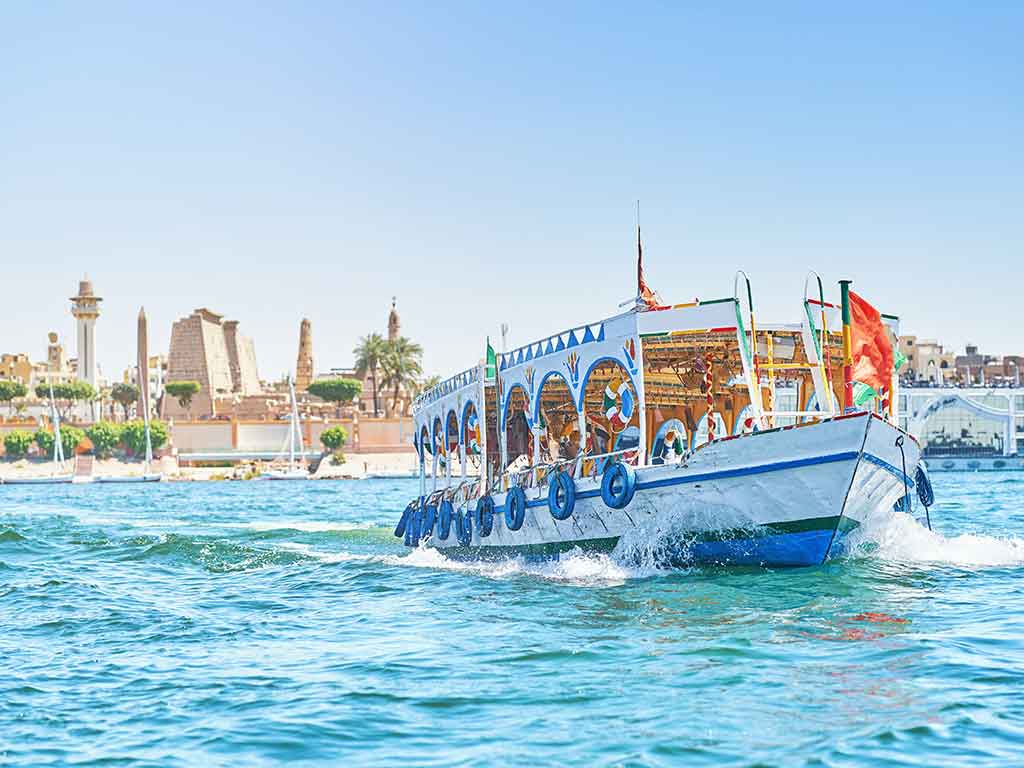
Crossing between the east and west banks of Luxor is, therefore, not a tourist novelty — it is a necessity. And the vessels that make those crossings — public ferries, private motorboats, graceful feluccas, and grand cruise ships — each tell their own story about life along the Nile. This guide covers all of them.
1. The Local River Ferries (National Ferries)
What Are the National Ferries?
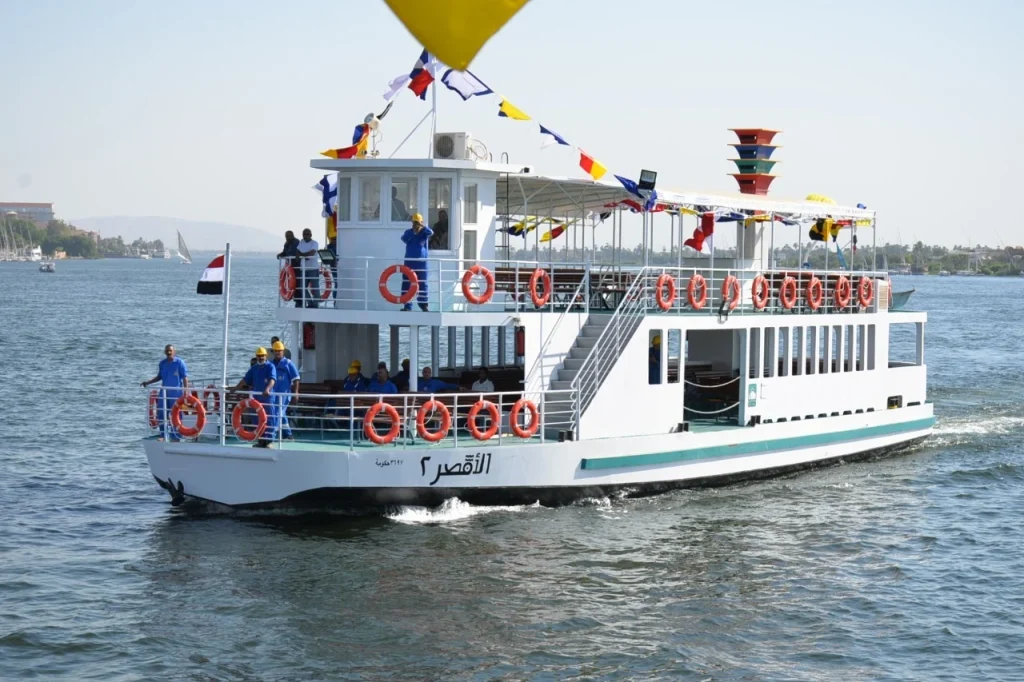
The most practical and historically rooted form of Nile river transportation in Luxor is the public ferry service, locally referred to as the national ferry or government ferry. These are large, flat-bottomed metal vessels operated by the Egyptian government, designed primarily to serve the daily movement of local residents between the two banks.
For the residents of the West Bank — farmers, tradespeople, schoolchildren, and service workers — the public ferry is essential infrastructure. There are no bridges crossing the Nile at Luxor city center, making these ferries the primary artery for tens of thousands of people every single day.
Practical Information for Tourists
Budget-conscious travelers and backpackers will find the national ferry one of the great bargains in all of Egyptian tourism:
- Route: The main passenger ferry runs between the East Bank dock (near Luxor Temple, at the end of the corniche) and the West Bank dock at El-Gezira / Al-Bayarat village.
- Operating Hours: Ferries run from early morning (approximately 6:00 AM) until late evening (around 11:00 PM), with fairly frequent departures throughout the day.
- Fare: The cost for tourists is typically a few Egyptian pounds — historically between 2 and 5 EGP for foreigners, though prices may adjust slightly with inflation. This remains one of the cheapest river crossings in the world.
- What to Expect: Ferries are large communal boats. Passengers share the vessel with locals going about their daily lives — merchants with goods, families, motorcycles, and the occasional live animal. The crossing takes approximately 10 to 15 minutes.
- Experience: This is authentic, unfiltered Egypt. Sitting on the upper deck of a national ferry at sunrise, watching fishermen on the Nile as the West Bank cliffs glow amber, is one of those travel moments that costs almost nothing and stays with you forever.
Tips for Using the National Ferry
- Arrive at the dock a few minutes early, as boats depart when full and schedules can be informal.
- Keep small change ready — ticket sellers prefer exact or near-exact fare.
- The ferry docks on the East Bank are located at two points along the Luxor corniche; confirm you are at the correct dock for passenger ferries (not the cargo/vehicle loading area).
- This service is perfectly safe and used by locals year-round.
2. Private Boats, Motorboats, and Feluccas
Private Motor Boats
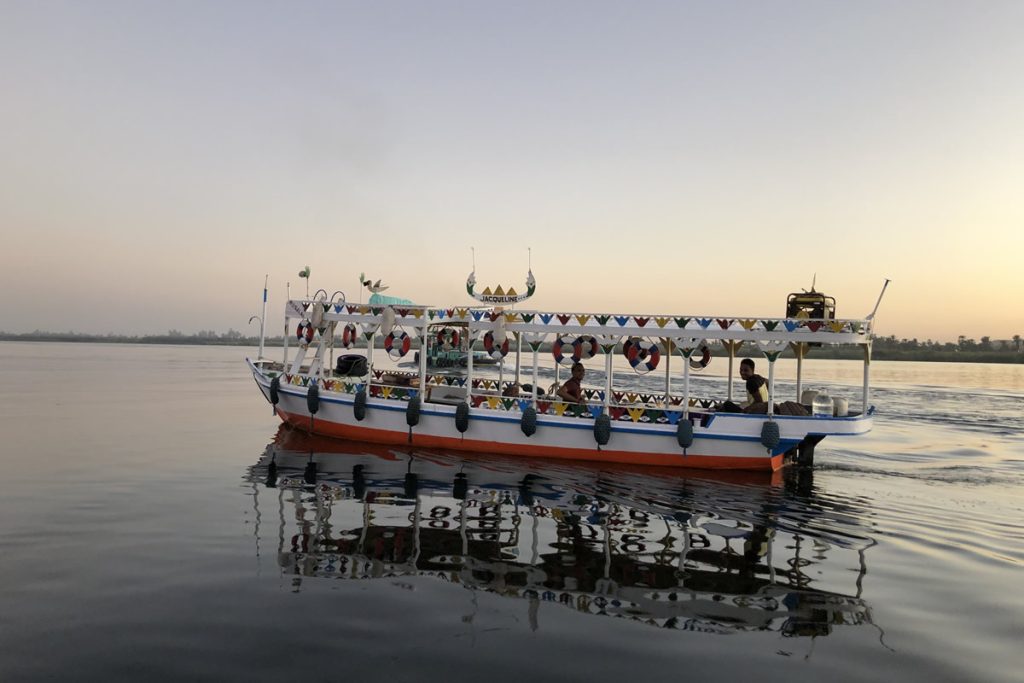
Alongside the public ferry system, a thriving private boat economy operates on the Luxor stretch of the Nile. These are small motorized wooden or fiberglass boats — essentially water taxis — owned and operated by independent boatmen. They cluster near the East Bank corniche, particularly around the ferry docks and near the major hotels.
Key characteristics:
- Speed and Flexibility: Private motorboats cross the river in 5 to 8 minutes, faster than the public ferry, and depart on-demand rather than on a schedule.
- Cost: Fares are negotiated directly with the boatman. Typical rates for a one-way crossing range from 20 to 50 EGP for tourists, though prices shift depending on time of day, season, and your negotiation skills.
- Custom Routes: Unlike the fixed public ferry, private boats can be chartered for leisure trips along the river — passing the banana islands, watching the sunset from the water, or accessing specific West Bank points.
- Availability: Found throughout the day and into the evening along the Luxor corniche.
Tourists undertaking Luxor tours that include both east and west bank sites in a single day often use a combination of private boats and tuk-tuks or taxis on the West Bank to maximize their time.
The Nile Felucca Ride
No Egypt travel guide would be complete without dedicated attention to the felucca — the ancient, lateen-rigged sailboat that has navigated the Nile for thousands of years. With its distinctive triangular sail and low, open hull, the felucca is one of the most iconic images in Egyptian tourism, and Luxor remains one of the best places in Egypt to experience one.
What is a felucca?
A felucca is a traditional wooden sailing vessel, powered entirely by wind and the Nile’s current. They are smaller than the private motorboats and carry no engine — the boatman uses the sail and a long pole to maneuver. Feluccas typically accommodate 6 to 12 passengers.
Felucca experiences in Luxor:
- Sunset cruises along the Nile — perhaps the single most popular felucca activity in Luxor. Gliding silently past the West Bank cliffs as the sun drops toward the desert is a genuinely memorable experience.
- Short leisure rides lasting 1 to 2 hours, circumnavigating the Banana Island (a small cultivated island mid-river), often combined with a brief stop.
- Overnight felucca trips departing southward toward Esna — a more adventurous option for travelers with flexible itineraries.
Practical details:
- Feluccas are hired from the Luxor corniche or from hotel-arranged tour desks.
- Prices for a 1-hour ride typically range from 100 to 250 EGP per boat (not per person), making them affordable when shared among a group.
- Always confirm the duration and route before departure, and negotiate the full price upfront.
- Feluccas have no engine, so journey times depend on wind conditions — embrace the unhurried pace as part of the experience.
A Nile felucca ride in Luxor is more cultural immersion than mere transport. It connects travelers directly to a mode of river travel that has changed little in over two millennia.
3. Nile Cruises and Long-Distance Vessels
Luxury Nile River Cruise Ships
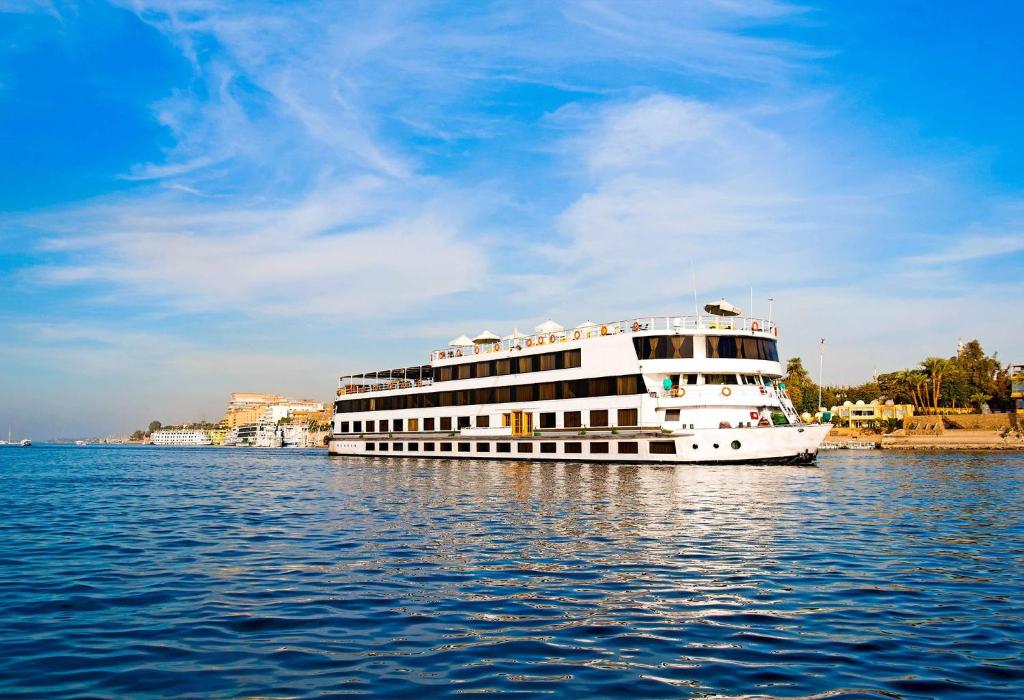
Among the grandest ways to experience the river is aboard one of the many Nile cruise ships that traverse the 200+ kilometers between Luxor and Aswan. A Nile river cruise from Luxor to Aswan (or in reverse) is widely considered one of the great journeys in global travel, and for good reason: the route passes through some of the most significant ancient sites in the world.
What to expect from a Luxor–Aswan cruise:
- Duration: Most standard cruises last 3 to 4 nights (Luxor to Aswan) or 7 nights (round-trip with extensions to Cairo). Shorter 2-night options also exist.
- Ships: Modern Nile cruise vessels are typically four or five-deck river ships, carrying between 40 and 100 cabins. They are equipped with restaurants, sundeck pools, lounges, and air-conditioned staterooms with Nile-facing windows.
- Itinerary highlights on the Luxor-to-Aswan route typically include stops at:
- Karnak and Luxor Temples (East Bank, Luxor)
- Valley of the Kings and Hatshepsut Temple (West Bank, Luxor)
- Esna Temple (Esna Lock crossing — a fascinating logistical spectacle)
- Edfu Temple (one of the best-preserved temples in Egypt)
- Kom Ombo Temple (the unique dual temple dedicated to Sobek and Horus)
- Aswan (Philae Temple, the High Dam, Felucca rides around Elephantine Island)
- Docking in Luxor: Cruise ships dock along the East Bank corniche in Luxor, often mooring 2 to 4 vessels deep during peak season (October through April). Guests are escorted to sites by certified Egyptian tour guides.
- Price range: Varies enormously by ship rating and season — budget vessels from approximately $300–$500 USD per person for 4 nights; luxury fleet ships (such as those operated by Sonesta, Oberoi, or Sanctuary Retreats) can reach $2,000+ per person.
Cargo and Dual-Use River Vessels
Not all large vessels on the Luxor Nile are tourist-oriented. The river also carries cargo barges and supply boats transporting construction materials, agricultural goods, and fuel between Upper and Lower Egypt. These vessels are a reminder that the Nile remains a working commercial waterway alongside its role in tourism in Egypt. Tourists will observe them at anchor or passing slowly through the river channel — they do not offer passenger services.
4. Conclusion: Navigation Tips for Your Luxor Tours
The river in Luxor is not simply a backdrop — it is a destination in itself, layered with utility, history, and beauty. Whether you cross it on a crowded public ferry for a few pounds, drift across at sunset on a silent felucca, or watch the ancient temple bank slide past from the deck of a cruise ship, the Nile in Luxor will be one of the defining experiences of any journey through Egypt.
Here are practical summary tips for navigating river transportation safely during your Luxor tours:
- For budget travelers: Use the national ferry for bank crossings — it is safe, authentic, and extraordinarily affordable.
- For flexibility: Hire a private motorboat if you need to cross at non-standard hours or want a more direct, on-demand service.
- For romance and culture: Book a sunset felucca ride at least once. It is the Nile as it has been experienced for thousands of years.
- For a multi-day Egyptian journey: A Nile river cruise from Luxor to Aswan offers unmatched access to Upper Egypt’s ancient sites with the comfort of a floating hotel.
- Always negotiate fares upfront with private boat operators and felucca captains, and agree on duration and route before boarding.
- Stay hydrated and use sun protection on open-deck vessels — the Nile sun is intense, especially between April and October.
- Respect local customs on public ferries — dress modestly and be considerate of local passengers going about their daily lives.
The Nile has transported humanity through 5,000 years of history. In Luxor, it still does — one crossing at a time.