Table of Contents
There is a moment, somewhere along Alexandria’s Corniche as the Mediterranean stretches out before you, when you realise this city is unlike anywhere else in Egypt. It is older than Cairo, more layered than Luxor in some ways, and far less visited than it deserves to be. Founded by Alexander the Great in 331 BCE, Alexandria was once the intellectual capital of the ancient world — home to the greatest library ever built, a lighthouse that ranked among the Seven Wonders, and a cosmopolitan culture that blended Greek, Roman, Jewish, and Egyptian traditions for centuries.
Today, Alexandria is Egypt’s second-largest city and its main Mediterranean port. For travelers, it works beautifully as a day trip from Cairo or as part of a broader Egypt travel package — and it rewards anyone who gives it more than a few hours. This guide covers the city’s history, its best landmarks and hidden corners, where to eat, the best time to visit, and how to plan your trip whether you are coming independently or as part of organized Cairo day tours.
Why Alexandria Is Worth Your Time
Alexandria tends to get overlooked in Egypt itineraries dominated by the Pyramids, Luxor, and Aswan. That is a mistake. The city offers something genuinely different: a Mediterranean atmosphere that feels distinct from the rest of Egypt, a coastline that stretches for over 30 kilometres, and historical layers that go back more than two thousand years. Walking through its older neighborhoods, you encounter Greco-Roman ruins, Ottoman architecture, belle époque apartment buildings, and bustling fish markets — often within a few blocks of each other.
For travelers on Cairo tours looking to add depth to their Egyptian experience, Alexandria is the obvious choice. It is close enough for a comfortable day trip yet different enough to feel like an entirely separate destination.
A Brief History of Alexandria
Alexander the Great chose the site personally in 331 BCE, recognizing the strategic value of its natural harbor on Egypt’s Mediterranean coast. Under the Ptolemaic dynasty that followed Alexander’s death, the city grew rapidly into one of the ancient world’s great metropolises. At its peak, Alexandria may have had a population of over half a million people — making it one of the largest cities on earth.
The city’s two defining institutions were the Library of Alexandria — which sought to collect all the world’s knowledge and at various points held hundreds of thousands of scrolls — and the Lighthouse of Alexandria on Pharos Island, one of the Seven Wonders of the Ancient World and a navigational landmark for centuries. Both are gone today, but their legacy defines the city’s identity.
Alexandria passed through Roman, Byzantine, Arab, Ottoman, and eventually British hands before becoming part of modern Egypt. Each era left traces that are still visible in the city’s architecture, culture, and street life. The Greco-Roman Museum, currently undergoing restoration, holds one of the finest collections of artifacts from this layered history.
Must-See Landmarks in Alexandria
The Citadel of Qaitbay
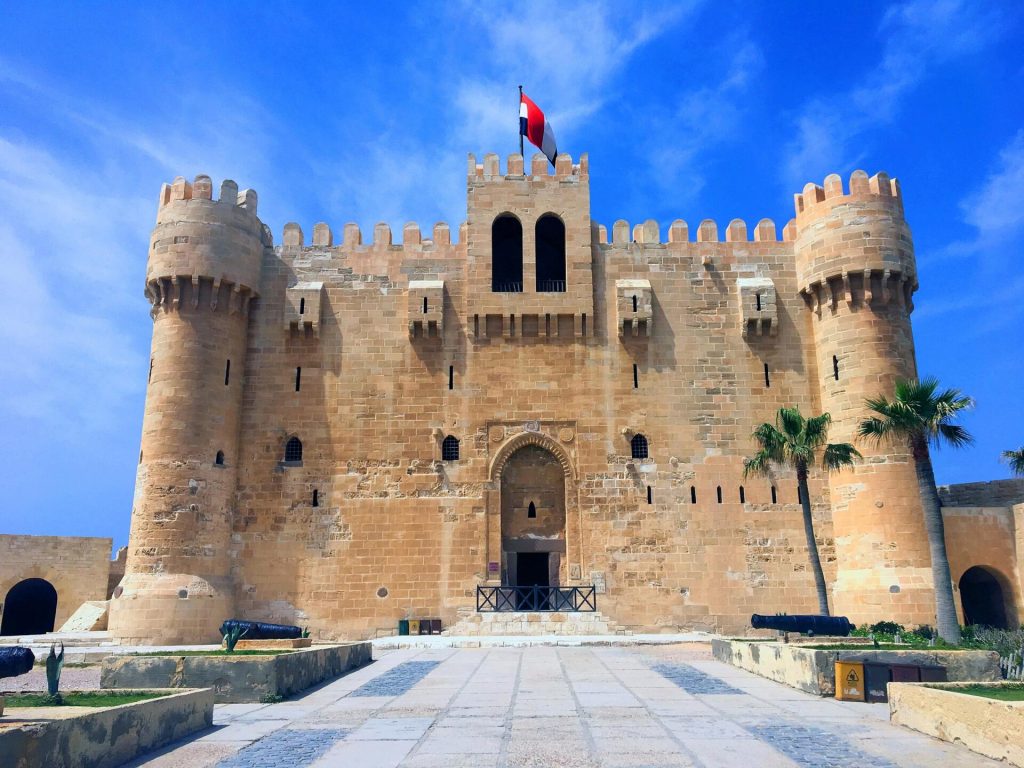
Built in 1477 on the exact site where the Lighthouse of Alexandria once stood, the Citadel of Qaitbay is the city’s most recognizable landmark. The Mamluk sultan Qaitbay used stones from the collapsed lighthouse to construct the fortress, meaning the building is literally made from one Wonder of the World. The citadel juts into the sea on a narrow peninsula, giving it commanding views of the harbor in every direction. Inside, there are exhibits on the fort’s military history, and the upper levels offer some of the best panoramic views in the city.
The Catacombs of Kom el Shoqafa
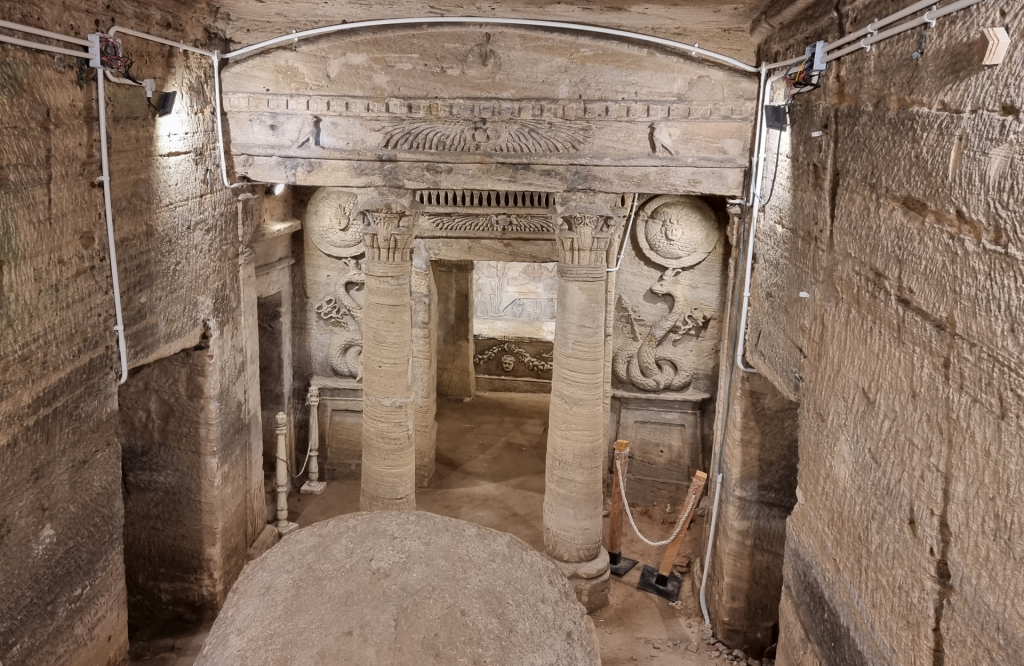
Discovered accidentally in 1900 when a donkey fell through the ground into an underground chamber, the Catacombs of Kom el Shoqafa are one of Alexandria’s most extraordinary sites. Carved into the rock during the 2nd century CE, the catacombs descend three levels underground and contain tombs decorated with a fascinating blend of Egyptian, Greek, and Roman imagery — a visual record of the cultural fusion that defined ancient Alexandria. They are considered one of the Seven Wonders of the Middle Ages.
The Bibliotheca Alexandrina
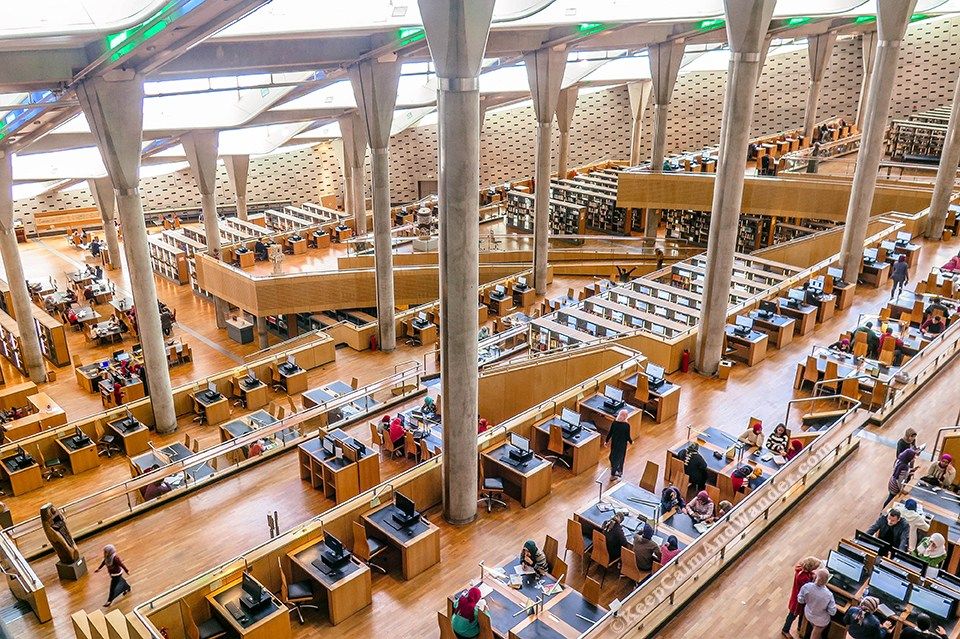
The modern Bibliotheca Alexandrina, opened in 2002, is a deliberate homage to the ancient Library of Alexandria. Designed by a Norwegian architectural firm, the building is striking — a massive tilted disc facing the sea, its exterior wall engraved with scripts from every writing system in the world. Inside, it functions as a working library, museum, planetarium, and cultural center. It is one of the most architecturally significant buildings in contemporary Egypt and worth visiting even if libraries are not usually your thing.
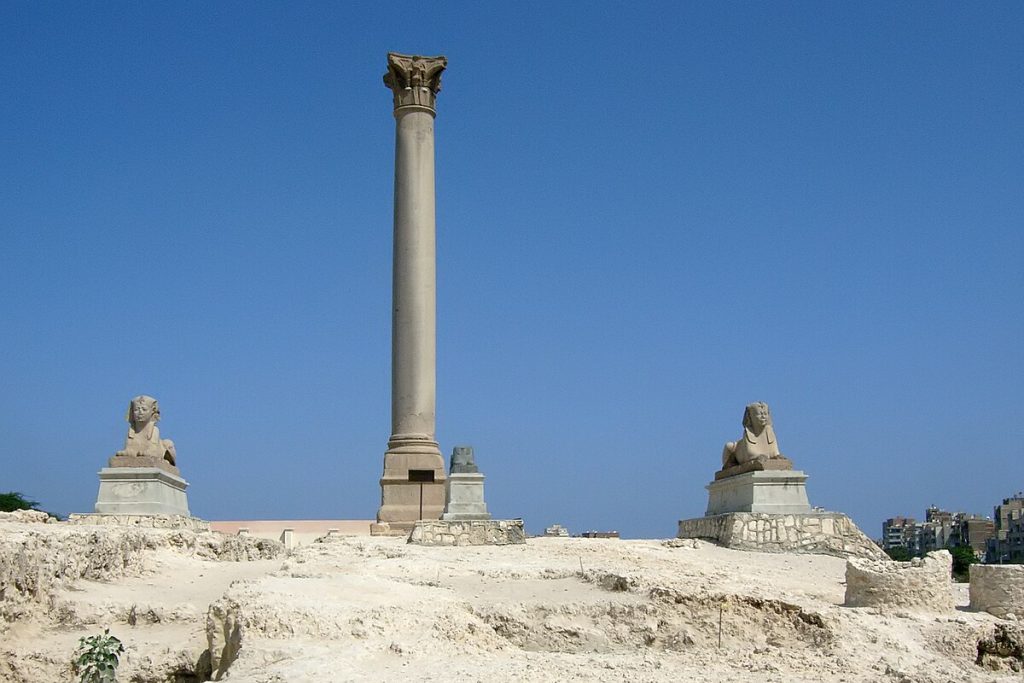
Pompey’s Pillar and the Serapeum
Pompey’s Pillar is a misleadingly named landmark — it has nothing to do with the Roman general Pompey, but was erected in 297 CE in honor of the Emperor Diocletian. At 27 metres tall, it is the largest ancient monolith outside Rome and stands within the ruins of the Serapeum, a temple complex once attached to a branch of the great Library. Two sphinxes flank the base, and the surrounding grounds contain various excavated fragments of ancient Alexandria.
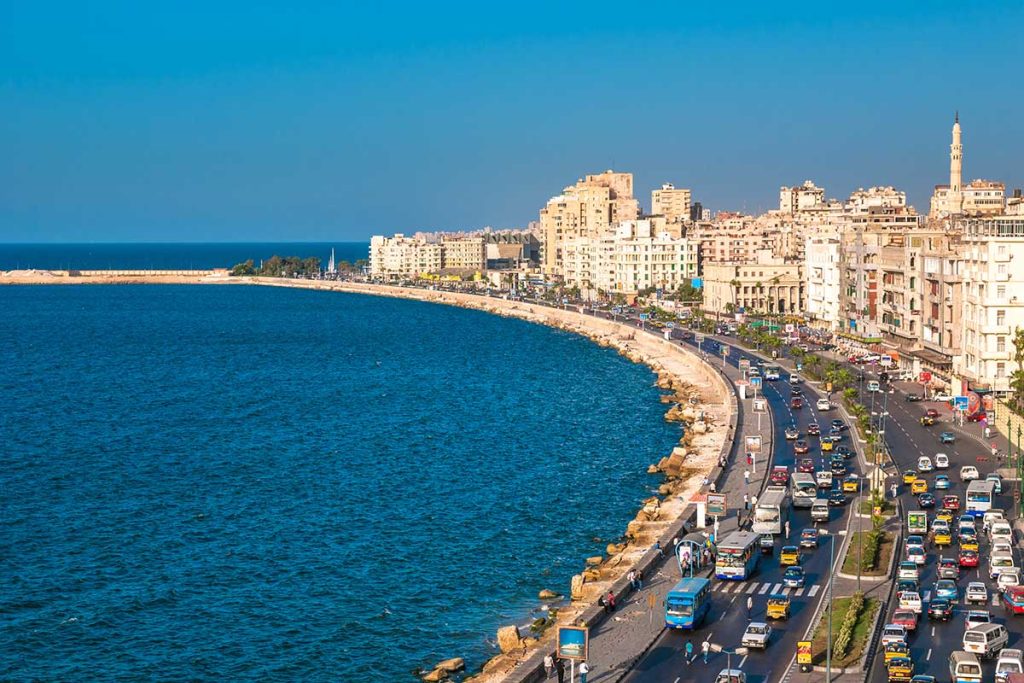
The Alexandria Corniche
The Corniche — Alexandria’s seafront promenade — stretches for roughly 26 kilometres along the Mediterranean coast. It is less a tourist attraction and more the city’s living room: locals walk, fish, cycle, and socialise along it at all hours. Early mornings are particularly atmospheric, with fishermen casting lines and the sea often shrouded in mist. The Corniche connects many of the city’s main neighborhoods and is the best way to feel Alexandria’s Mediterranean character rather than just observe it.
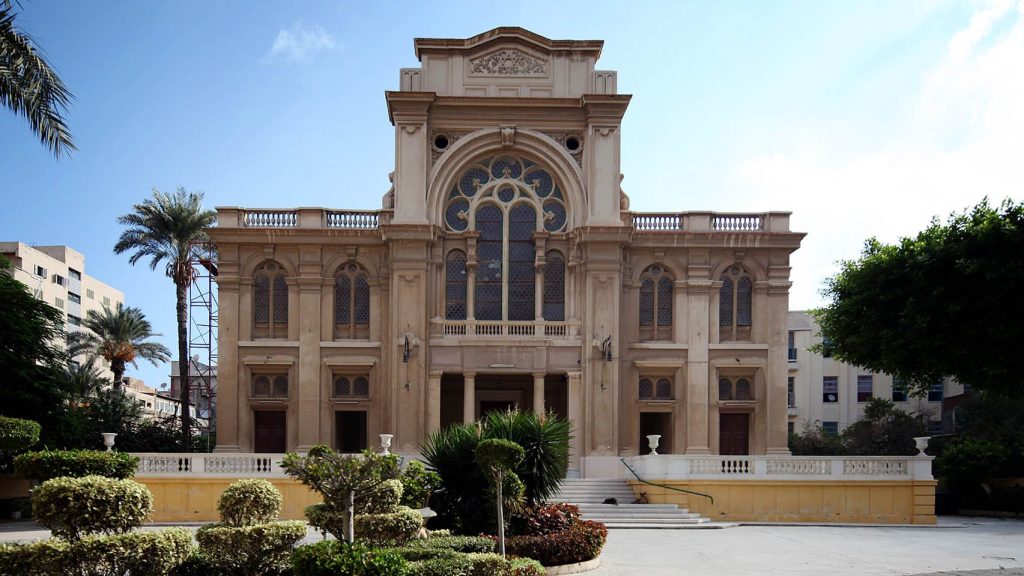
Eliyahu Hanavi Synagogue
Located in downtown Alexandria on Nabi Daniel Street, the Eliyahu Hanavi Synagogue is one of the largest and most historic Jewish places of worship in the Middle East. Originally built in the 13th century and rebuilt in 1850 after being damaged during Napoleon’s invasion, the synagogue stands as a magnificent reminder of Alexandria’s once-thriving cosmopolitan and multicultural heritage. Featuring striking green marble pillars, grand brass chandeliers, and seating for over 700 worshippers, the synagogue recently underwent a massive government-led restoration and officially reopened as an active cultural and heritage site. It is a compelling stop for travelers interested in the diverse religious layers of Egypt’s Mediterranean capital.
Hidden Gems: Alexandria Beyond the Landmarks
Alexandria rewards slow exploration. The city’s older neighborhoods — particularly around Kom el Shoqafa and the areas behind the Corniche — contain streets that most visitors never reach, full of old coffee houses, crumbling belle époque buildings, and local life that feels entirely unchanged by tourism.
The Montaza Palace Gardens in the eastern part of the city offer a quieter escape: vast grounds containing two royal palaces (built for the khedives and later used by King Farouk), landscaped gardens, and a private beach. The palaces themselves are not always open to visitors, but the grounds are accessible and popular with Alexandrian families on weekends.
The city’s fish market near the harbor is one of those places that travel guides mention but visitors often skip — and they are wrong to. Early in the morning, the docks are alive with the catch coming in, vendors setting up, and the particular controlled chaos of a working Mediterranean port. It is one of the most vivid scenes in the city.
Alexandria’s Food Scene: What to Eat and Where
Alexandria’s position on the Mediterranean makes it Egypt’s best city for seafood, and the difference from Cairo is immediately noticeable. Fresh fish and shellfish are available everywhere, from upmarket restaurants along the Corniche to casual spots in the fish market area where you choose your fish by weight and have it cooked to order.
Beyond seafood, the city has its own street food culture. Look for hawawshi (spiced minced meat in crispy bread), feteer (a layered Egyptian pastry served sweet or savory), and the city’s excellent ta’ameya (Egyptian falafel), which many Alexandrians argue is better than Cairo’s. For dessert, basbousa and kunafa are ubiquitous and reliably good.
The city’s cafe culture is also worth noting. Alexandria has a long tradition of old-style coffee houses — some dating back to the early 20th century — where you can sit for hours over Turkish coffee or tea and watch the street life unfold.
Best Time to Visit Alexandria
Alexandria’s Mediterranean climate makes it more comfortable year-round than most of Egypt, but the timing of your visit still matters. Spring (March to May) and autumn (September to November) are the ideal windows: temperatures are mild, the sea is pleasant, and the city is not overwhelmed with visitors.
Summer brings Egyptians from Cairo and elsewhere to Alexandria’s beaches in large numbers, making the city feel crowded and accommodation more expensive. If you visit in summer, expect a livelier, noisier city with a strong holiday atmosphere — which some travelers enjoy. Winter is quiet and occasionally rainy, but temperatures remain mild and the city has a certain melancholy charm in the off-season that appeals to a certain kind of traveler.
How to Get to Alexandria from Cairo
Alexandria is approximately 220 kilometres northwest of Cairo, making it one of the most accessible day trips from the capital. There are three main options for the Cairo to Alexandria journey.
By Car
Traveling by private car is the most flexible option and allows you to stop along the way and move around Alexandria at your own pace. The drive takes roughly two to two and a half hours on the Desert Road connecting the two cities, which is well-maintained and straightforward. If you are looking for a guided experience, a Day Trip to Alexandria from Cairo By Car is a popular choice that combines comfortable transport with a knowledgeable guide — ideal if you want to cover the main landmarks efficiently without the logistics of navigating independently.
By Train
Egypt’s rail network connects Cairo’s Ramses Station to Alexandria’s Misr Station with frequent departures throughout the day. The journey takes between two and three hours depending on the service, and the trains are comfortable and reasonably priced. This is a good option if you want to experience local travel and arrive directly in the city center.
By Bus
Several bus companies operate frequent services between Cairo and Alexandria, departing from various points in Cairo. Journey times are similar to the train. Buses are the most economical option, though comfort levels vary between operators.

Planning Alexandria Into Your Egypt Itinerary
Alexandria works well at different scales depending on how much time you have in Egypt. As a Cairo day tour, it gives you a genuine taste of the city’s Mediterranean character and its most important landmarks. A full day is enough for the Citadel, the catacombs, the Bibliotheca, and a meal along the Corniche — which is a satisfying itinerary for first-time visitors.
For travelers with more time, Alexandria fits naturally into Egypt short breaks — two to four day trips that combine Cairo with one or two additional destinations. Pairing Alexandria with the Pyramids and central Cairo gives you a well-rounded introduction to both ancient and modern Egypt without the need for internal flights.
If you are planning a longer trip, Alexandria is a logical addition to Classic Egypt tours that typically combine Cairo, Luxor, and Aswan. Adding two or three days in Alexandria gives those itineraries a Mediterranean dimension that makes the overall experience considerably richer. The city is also frequently included in Egypt vacation packages designed for travelers who want a comprehensive overview of the country rather than a purely pharaonic focus.
Practical Tips for Visiting Alexandria
- Alexandria is large — plan your day geographically to avoid doubling back. The Citadel and the Corniche are in the west; Montaza is in the east. Pick one area to focus on per day if you have more than one.
- Taxis and ride-hailing apps (Uber and Careem both operate in Alexandria) are the easiest way to get between sites. The bus system is functional but harder to navigate for first-time visitors.
- The Catacombs of Kom el Shoqafa involve steep descents and low lighting — wear comfortable shoes and be prepared for a confined underground environment.
- The Citadel of Qaitbay is best visited in the afternoon when the light on the sea is at its most striking.
- If you are visiting the Bibliotheca Alexandrina, check in advance whether any exhibitions or events coincide with your visit — the cultural programming is often excellent.
- Friday mornings are the quietest time to visit most landmarks, as many locals attend Friday prayers. Friday afternoons and weekends are the busiest.
- Alexandria’s weather is cooler and windier than Cairo — bring a light layer even in summer, particularly for evenings on the Corniche.
Is Alexandria Worth Adding to Your Egypt Trip?
Without question. Alexandria is not a second-tier destination that you visit because you have run out of things to do in Cairo — it is a city with its own distinct identity, its own extraordinary history, and its own compelling reasons to visit. The combination of Greco-Roman heritage, Mediterranean atmosphere, remarkable food, and relative lack of mass tourism makes it one of the most rewarding places in Egypt for travelers who want something beyond the standard pharaonic circuit.
Whether you come for a single day as part of your Cairo tours or build it into a longer Egypt travel package, Alexandria will give you something that the rest of Egypt cannot: the feeling of standing at the intersection of ancient history and the living Mediterranean world. That is a combination worth going out of your way for.