Table of Contents
Aswan is where Egypt slows down. After the noise and scale of Cairo, and the monument-heavy intensity of Luxor, Aswan arrives like a long exhale — a city built along one of the most beautiful stretches of the Nile River, where the water runs clear and the granite boulders of the First Cataract break the surface in every direction. The light here is different too: softer, more golden, particularly in the late afternoon when the feluccas drift across the river and the hills of the west bank turn amber.
But Aswan is not just scenery. It is one of the most historically significant cities in Egypt, the gateway to ancient Nubia, and the base for some of the country’s most rewarding day trips — including Abu Simbel, one of the greatest archaeological sites in the world. Whether you are here for two days as part of a Classic Egypt tour, joining a Nile cruise heading north to Luxor, or building a longer Egypt travel package around Upper Egypt, this guide covers everything you need to plan your visit.
Why Aswan Deserves a Place in Your Egypt Itinerary
Aswan tends to be the southernmost point on most Egypt itineraries, and some travelers rush through it on the way to or from a Nile cruise. That is a mistake. The city has its own distinct character — shaped by its Nubian heritage, its position at the edge of the Sahara, and its long history as a trading crossroads between Egypt and sub-Saharan Africa — that rewards time spent exploring rather than simply passing through.
For travelers on Aswan tours, the city offers a combination that is hard to match elsewhere in Egypt: ancient temples, living Nubian culture, extraordinary Nile scenery, and proximity to Abu Simbel. Add the option of beginning or ending a Nile river cruise here, and Aswan becomes not just a destination but the logical anchor for an entire Upper Egypt itinerary.
A Brief History of Aswan
Aswan’s strategic importance goes back to antiquity. The city — known in ancient times as Swenett, and later as Syene — marked the southern boundary of pharaonic Egypt and served as a major trading post for goods arriving from sub-Saharan Africa: gold, ivory, spices, and enslaved people. The granite quarried from the hills around Aswan was used to build monuments across Egypt, including the obelisks at Karnak and Luxor.
The Elephantine Island in the middle of the Nile at Aswan was one of the earliest inhabited sites in Egypt, with evidence of settlement dating back more than 5,000 years. The island’s ancient nilometer — a gauge used to measure the Nile’s annual flood — was essential for calculating agricultural yields and tax assessments across the entire country.
In the modern era, Aswan became the site of two of Egypt’s most ambitious engineering projects: the Aswan Low Dam, built by the British in 1902, and the Aswan High Dam, completed in 1970. The High Dam created Lake Nasser — one of the largest artificial lakes in the world — and necessitated the relocation of dozens of ancient Nubian monuments, most famously the temples of Abu Simbel.

Top Attractions and Things to Do in Aswan
Philae Temple
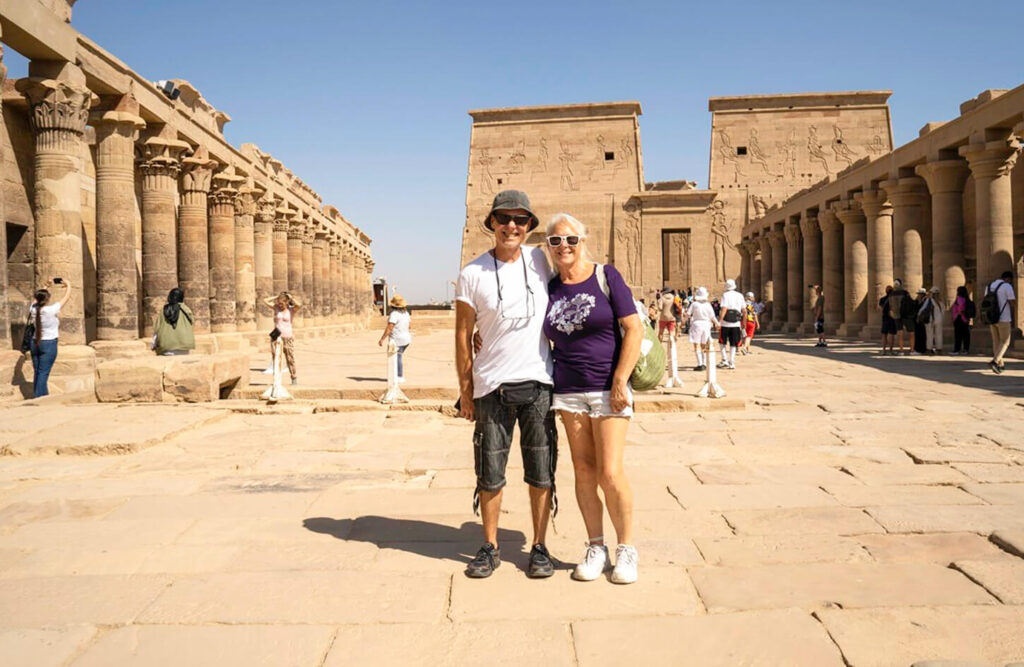
The Temple of Isis at Philae is arguably the most beautiful temple complex in Egypt. Originally located on Philae Island, it was dismantled and relocated to the nearby Agilkia Island between 1972 and 1980 as part of the same UNESCO rescue campaign that saved Abu Simbel — a feat of engineering that preserved one of antiquity’s most elegant sanctuaries. The temple is dedicated primarily to the goddess Isis, with additional shrines to Osiris, Horus, and Hathor, and its setting surrounded by the Nile makes it genuinely breathtaking.
The Day Tour to Philae Temple and Aswan High Dam combines the temple with a visit to the High Dam itself — a pairing that offers a satisfying contrast between ancient and modern engineering achievements. For an entirely different experience of the same site, the Sound and Light Show at Philae Temple illuminates the temple after dark with a narrated display that brings its mythology to life in a way the daytime visit cannot.
The Aswan High Dam
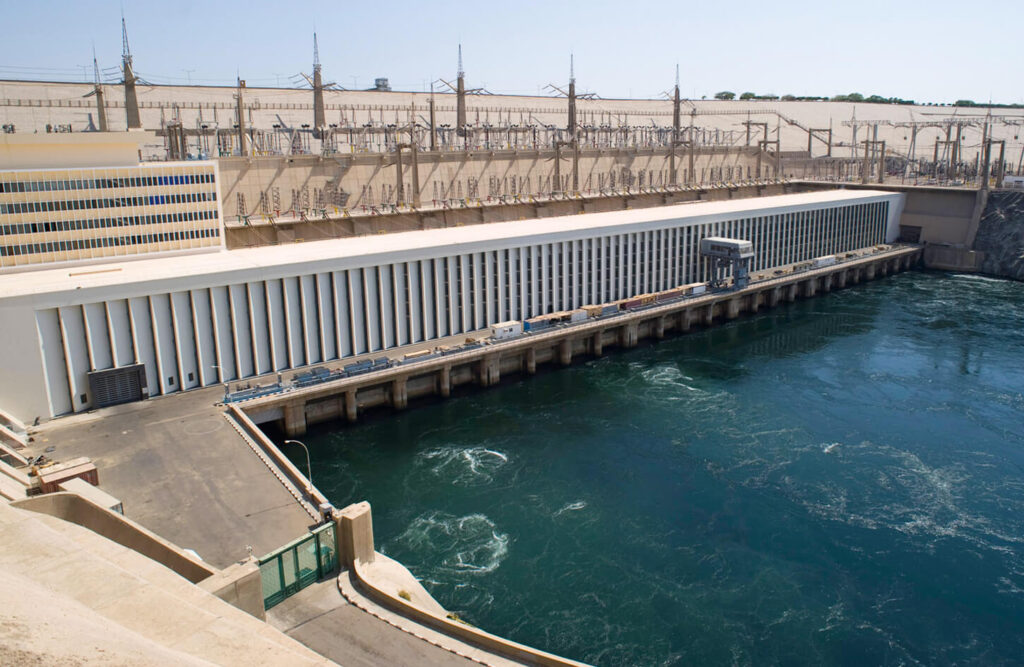
The Aswan High Dam is one of the largest embankment dams ever built, stretching nearly 4 kilometres across and holding back the waters of Lake Nasser — a reservoir that extends over 500 kilometres into Sudan. When it was completed in 1970, it transformed Egypt’s agricultural economy by controlling the Nile’s annual flood and providing reliable irrigation year-round. The dam also generates a significant proportion of Egypt’s electricity. Standing on top of it, looking south over the still expanse of Lake Nasser and north toward the cataract, gives a genuine sense of its scale.
The Nubian Museum
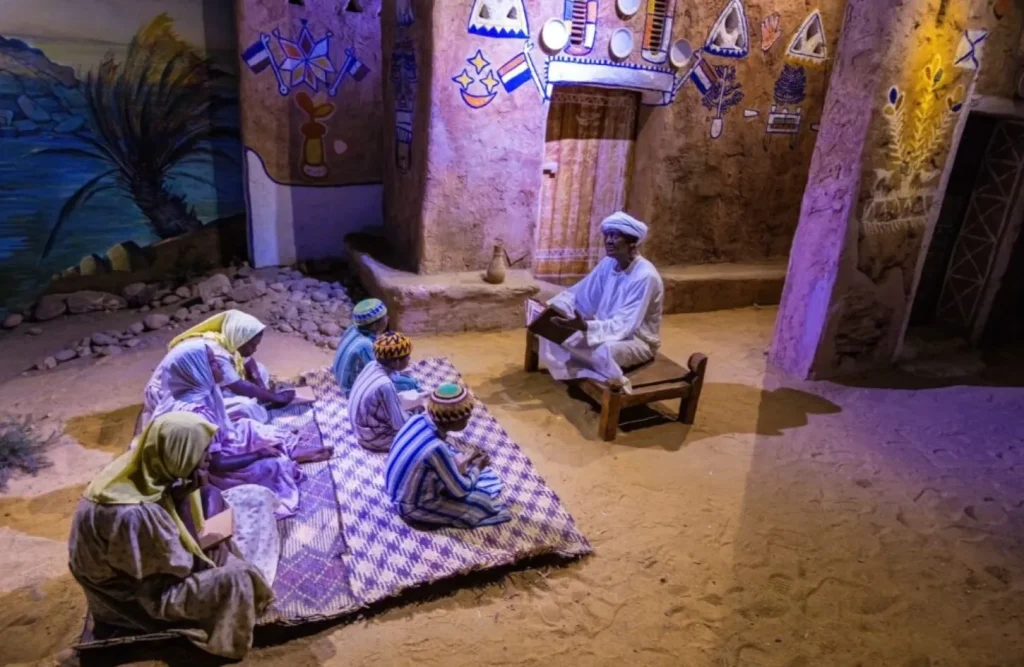
The Nubian Museum in Aswan is one of the finest regional museums in Egypt and essential for understanding the culture and history of the people whose homeland was submerged by Lake Nasser. The collection covers Nubian civilization from prehistoric times to the present, with exhibits on ancient Nubian kingdoms, the impact of the High Dam, and the rich artistic traditions of Nubian culture. The building itself — designed to reflect Nubian architectural motifs — is worth visiting in its own right. The Aswan Kalabsha Temple and Nubian Museum Tour pairs the museum with a visit to the relocated Kalabsha Temple on the shores of Lake Nasser, one of the largest freestanding temples of ancient Nubia.
Nubian Villages
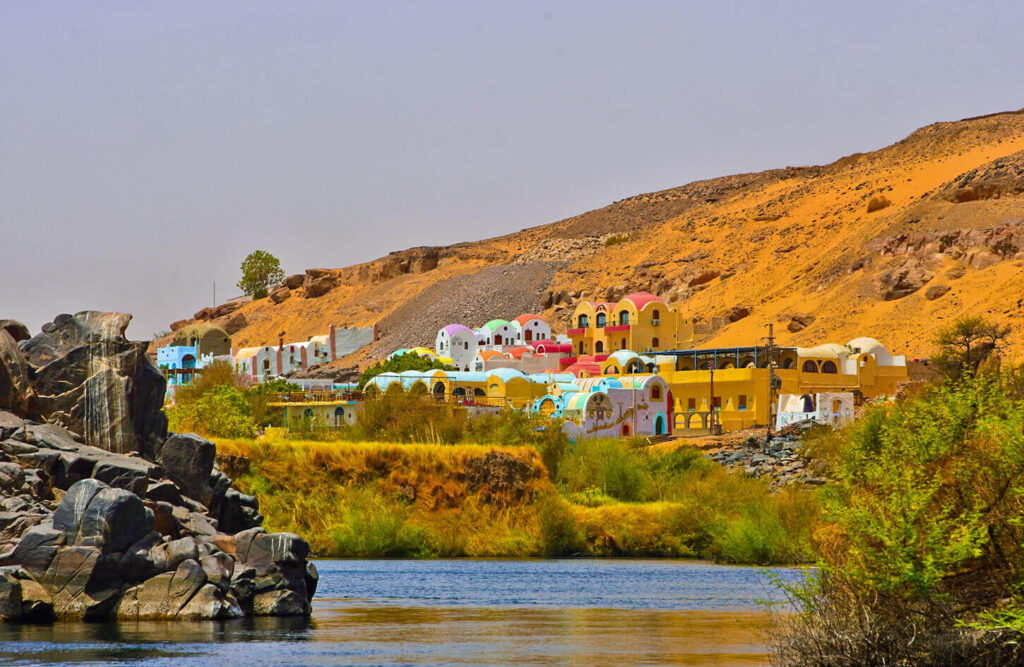
The Nubian villages on the west bank of the Nile near Aswan are among the most visually distinctive communities in Egypt — their houses painted in vivid blues, yellows, and greens, decorated with murals and geometric patterns that reflect a cultural tradition stretching back centuries. Visiting by boat across the Nile is part of the experience. A Trip to the Nubian Villages by Boat offers a genuine encounter with local life — including traditional food, music, and the warm hospitality that Nubian communities are known for throughout Egypt.
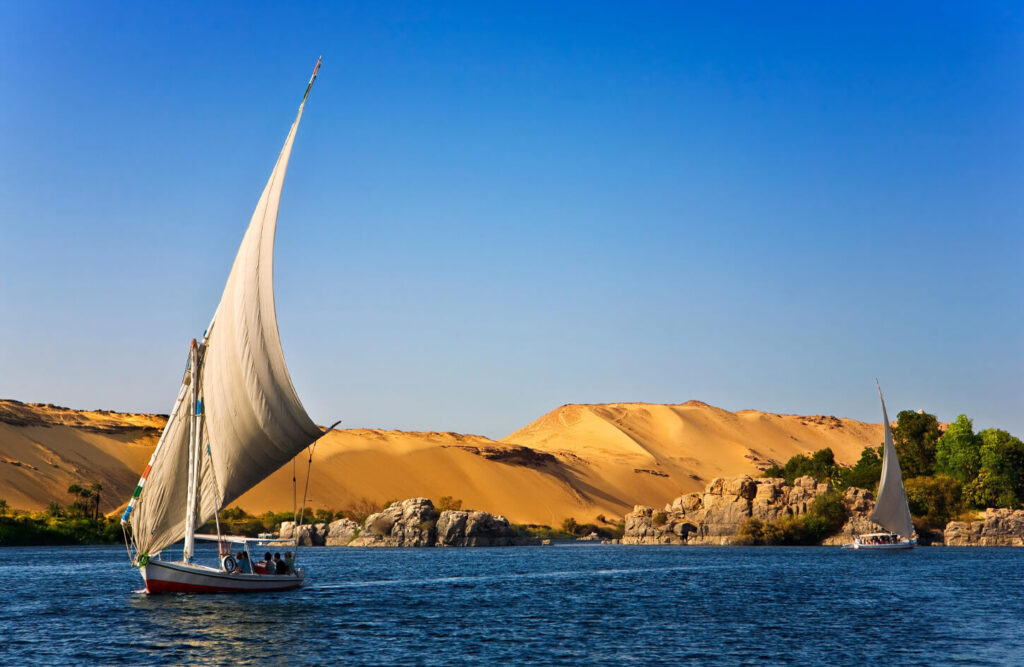
Felucca Ride on the Nile
A felucca ride — sailing on one of the traditional wooden boats that have worked the Nile for centuries — is one of the most quintessentially Aswan experiences there is. The stretch of river around Aswan, with its granite islands, smooth water, and the desert hills on the west bank, is arguably the most scenic felucca sailing in Egypt. A Felucca Ride on the Nile in Aswan is a perfect way to spend a late afternoon — unhurried, quiet, and with some of the best views the city has to offer.
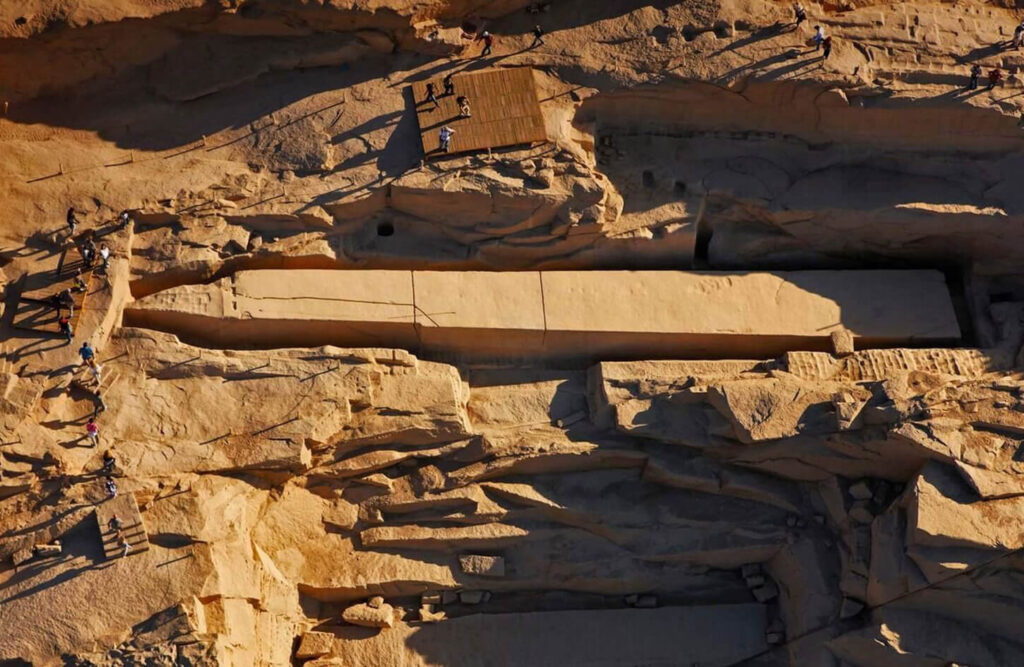
Elephantine Island and the Unfinished Obelisk
Elephantine Island sits in the middle of the Nile opposite central Aswan and contains some of the oldest archaeological remains in the city, including the ancient nilometer and the ruins of temples dating back to the Old Kingdom. The island also has a small but well-curated local museum. The Unfinished Obelisk, on the east bank of the Nile in the ancient granite quarries south of Aswan, offers a fascinating insight into ancient Egyptian construction methods — a massive obelisk that was abandoned in place when a crack appeared in the stone, still attached to the bedrock after three and a half thousand years.
Day Trips from Aswan: Abu Simbel, Kom Ombo, and Edfu
Aswan’s position in southern Egypt makes it the departure point for some of the country’s most rewarding Aswan day tours. These are not optional extras — they are among the best things Egypt has to offer.
Abu Simbel
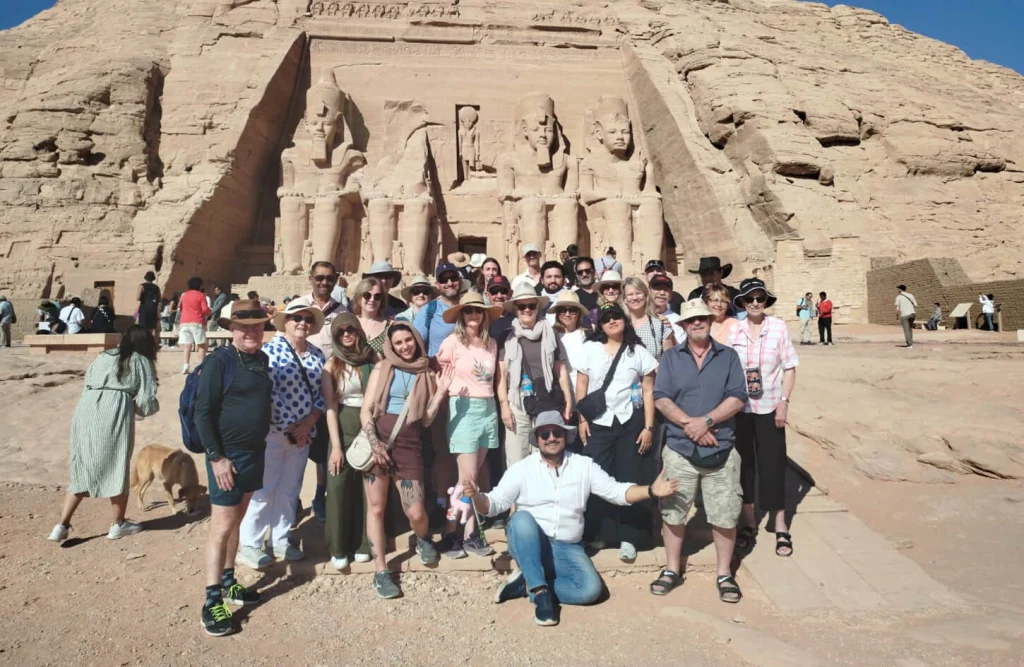
The temples of Abu Simbel — two massive rock-cut sanctuaries built by Ramses II in the 13th century BCE and relocated in the 1960s to save them from Lake Nasser — are approximately 280 kilometres south of Aswan and rank among the most extraordinary archaeological sites in the world. The scale of the Great Temple’s facade, with its four colossal seated statues each 20 metres tall, is one of those things that photographs cannot adequately convey. A Tour to Abu Simbel Temple from Aswan is the most direct way to experience the site, with round-trip transport and a guide included.
Kom Ombo and Edfu
Kom Ombo Temple, roughly 45 kilometres north of Aswan, is one of Egypt’s most unusual temples — a perfectly symmetrical double sanctuary dedicated jointly to Sobek the crocodile god and Horus the falcon god. The temple contains a fascinating collection of ancient surgical instruments carved in relief, and a small museum of mummified crocodiles found on site. Edfu Temple, further north near the town of Edfu, is one of the best-preserved temples in Egypt — a massive Ptolemaic sanctuary to Horus that gives the clearest impression of what a fully intact ancient Egyptian temple would have looked like. The Day Trip to Kom Ombo and Edfu Temples from Aswan covers both in a single well-structured day.
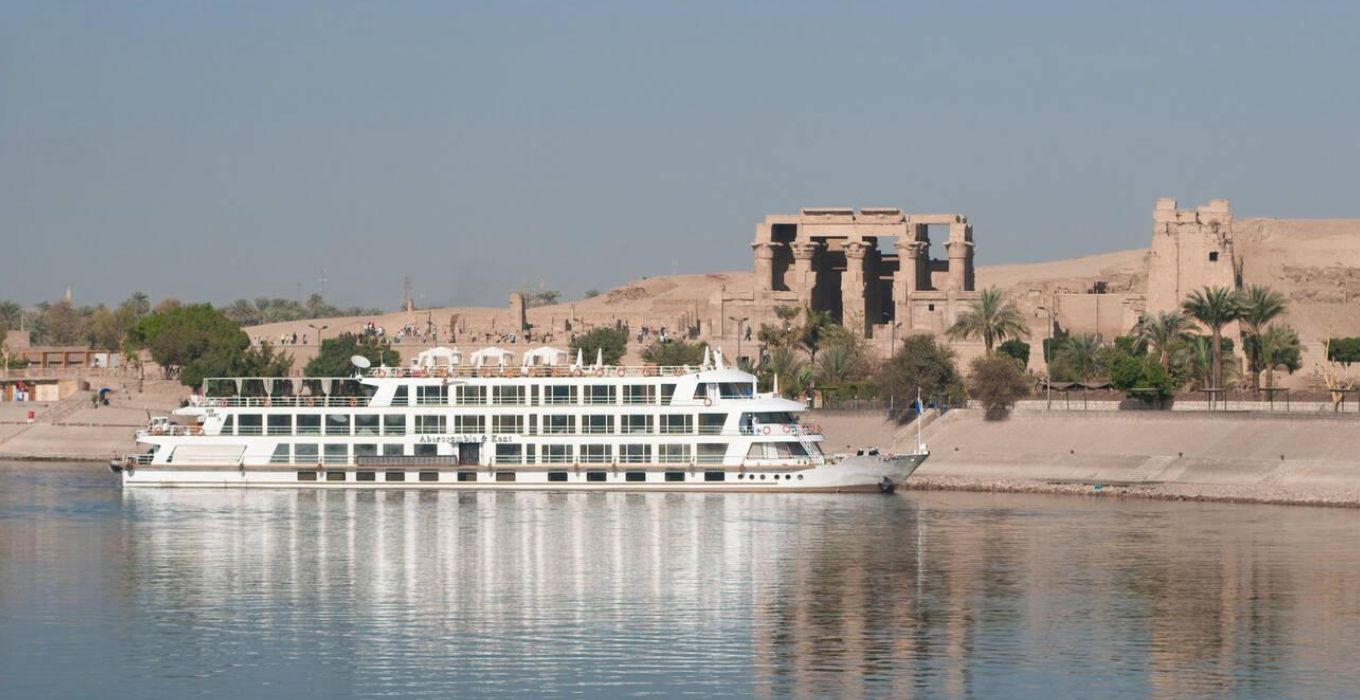
Nile Cruises from Aswan: The Classic Way to Travel to Luxor
The stretch of the Nile between Aswan and Luxor — roughly 200 kilometres of river passing through some of the most historically rich landscape in the world — is one of the great travel routes in Egypt. An Aswan to Luxor cruise typically takes three to four nights and stops at Kom Ombo, Edfu, and Esna along the way, allowing you to experience the temples from the river rather than rushing between them by road.
Standard Nile cruise ships are large vessels carrying dozens of cabins, with on-board restaurants, sun decks, and guided excursions at each stop. They are efficient and well-organised, and for many travelers the ideal way to cover Upper Egypt without the effort of moving accommodation every day. For a more intimate and slower-paced experience, a Dahabiya Nile cruise — on a traditional two-masted sailing vessel carrying a small number of guests — offers something closer to how travelers explored the Nile a century ago. Dahabiyas are quieter, more flexible, and allow access to parts of the river that larger cruise ships cannot reach.
An Egypt river cruise beginning or ending in Aswan fits naturally into both Egypt short breaks focused on Upper Egypt and longer Classic Egypt tours that combine Cairo, the Pyramids, and the Nile valley into a single itinerary. Many Egypt travel packages include a Nile cruise as the centrepiece of the Upper Egypt section, with Aswan as either the starting or finishing point.
Best Time to Visit Aswan
Aswan is one of the hottest cities in Egypt — and in the world. Summer temperatures regularly exceed 42 degrees Celsius, making outdoor sightseeing genuinely punishing between June and August. The city receives virtually no rainfall year-round.
The optimal window for visiting is October through April, when daytime temperatures sit between 25 and 30 degrees Celsius — warm and sunny but manageable for walking between sites. November through February is the most popular period and the most comfortable, with evenings cool enough to require a light layer. January and February can feel almost cold by Egyptian standards, particularly on the river after sunset.
If you are planning to visit Abu Simbel for the Sun Festival — when sunlight illuminates the inner sanctuary on February 22nd and October 22nd — book accommodation in Aswan and transport to Abu Simbel several months in advance, as both fill up quickly around those dates.
How to Get to Aswan
Aswan is well connected to the rest of Egypt by air, rail, and road. Aswan International Airport receives daily flights from Cairo, taking approximately one hour — the most convenient option for travelers on a tight schedule. Trains from Cairo to Aswan run overnight and during the day, with the journey taking between nine and thirteen hours depending on the service; the sleeper train is a popular and comfortable option that saves a night’s accommodation. From Luxor, Aswan is roughly three hours by road or rail — easily done as a continuation of an Upper Egypt itinerary traveling south.
Practical Tips for Visiting Aswan
- Start early at outdoor sites — the heat builds quickly after 9am, and the Pyramids plateau, Abu Simbel, and the Philae boat crossing are all far more comfortable in the first hours of the day.
- The Philae Temple boat crossing is a short ride from the Shellal dock south of the High Dam — taxis and tour vehicles drop you here, not at the temple itself.
- For Abu Simbel, departures from Aswan are typically very early (3–4am by road) to arrive at the site shortly after it opens. A flight is a faster but more expensive alternative.
- Carry cash in Egyptian pounds for entrance fees, tips, and purchases in the souq. ATMs are available in central Aswan but less reliable in smaller areas.
- The Aswan souq — the city’s main market street — is one of the most relaxed and least pressured bazaars in Egypt, with spices, Nubian crafts, and textiles worth browsing.
- Dress modestly for temple visits — shoulders and knees covered. A light scarf is useful for women visiting active religious sites.
- If you are joining a Nile cruise in Aswan, most ships embark from the Corniche in central Aswan. Confirm your embarkation point with the operator in advance.
Planning Aswan Into Your Egypt Itinerary
Aswan works at different scales depending on the length of your trip. As a two-day stop within a Classic Egypt tour, it gives you time for Philae, the High Dam, a felucca ride, and an Abu Simbel day trip — which is a genuinely satisfying introduction to the city. Three or four days allows you to add Kom Ombo and Edfu, explore the Nubian villages, and spend time simply enjoying the Nile without rushing.
For travelers interested in Egypt short breaks focused specifically on Upper Egypt, Aswan combined with Luxor over four to five days — ideally connected by a Nile cruise — is one of the most rewarding itineraries Egypt offers. It covers the greatest concentration of ancient monuments in the world while giving you the experience of traveling the river that made all of it possible.
Longer Egypt travel packages that begin in Cairo and move south through Luxor to Aswan represent the classic Egyptian journey, and for good reason: the progression from the Pyramids and Islamic Cairo to the temples of Karnak and the Valley of the Kings, and finally to the quiet beauty of Aswan and the grandeur of Abu Simbel, tells the full story of Egypt in a way that no single destination can.
Is Aswan Worth the Journey South?
Completely. Aswan offers something that the more visited parts of Egypt sometimes struggle to provide: a sense of calm, of space, and of genuine connection with the landscape that the Nile created. The monuments here — Philae, Abu Simbel, Kom Ombo, the Nubian Museum — are as impressive as anything in Luxor or Cairo, and they are experienced in a setting that is simply more beautiful. The Nubian culture of the region adds a human dimension that pure monument-touring lacks.
Whether you come for the Aswan day tours, to board a Nile cruise heading north, or simply to sit by the river and watch the feluccas pass, Aswan will stay with you. It is, for many travelers, the part of Egypt they did not expect to love most — and the place they most want to return to.