Table of Contents
Knowing how to plan a trip to Egypt can feel overwhelming at first — and understandably so. Egypt is one of the world’s most layered destinations, combining ancient monuments, desert landscapes, Mediterranean coastline, and one of the great river journeys on earth into a single country that rewards careful planning far more than it rewards improvisation. The difference between a rushed, frustrating visit and an extraordinary one is almost always in the preparation.
This guide walks you through every stage of planning: choosing your itinerary, understanding entry requirements, budgeting realistically, deciding where to stay and how to get around, and selecting the type of Egypt travel package that fits what you actually want from the trip. Whether you are looking at a short break or a comprehensive two-week journey, the principles are the same — and this guide covers all of them.
How to Plan a Trip to Egypt: Where to Start
Egypt is an enormous country with extraordinary variety. The Pyramids of Giza and Cairo in the north, the temples of Luxor and Aswan in the south, the Red Sea resorts on the east coast, the Mediterranean in the north, and the vast Western Desert in between — covering all of it in a single trip is not realistic, and trying to do so is one of the most common planning mistakes first-time visitors make.
The travelers who get the most out of Egypt are those who choose their focus deliberately, allow enough time at each destination, and build their itinerary around what genuinely interests them rather than trying to see everything. A focused week in Cairo, Luxor, and Aswan will be far more rewarding than a rushed attempt to cover every corner of the country in the same time.
Step One: Decide What Kind of Egypt Trip You Want
Before looking at specific destinations or dates, the most useful thing you can do is decide what kind of experience you are after. Egypt offers several quite different types of trip, and the planning process looks very different depending on which one you choose.
Classic Egypt Tours
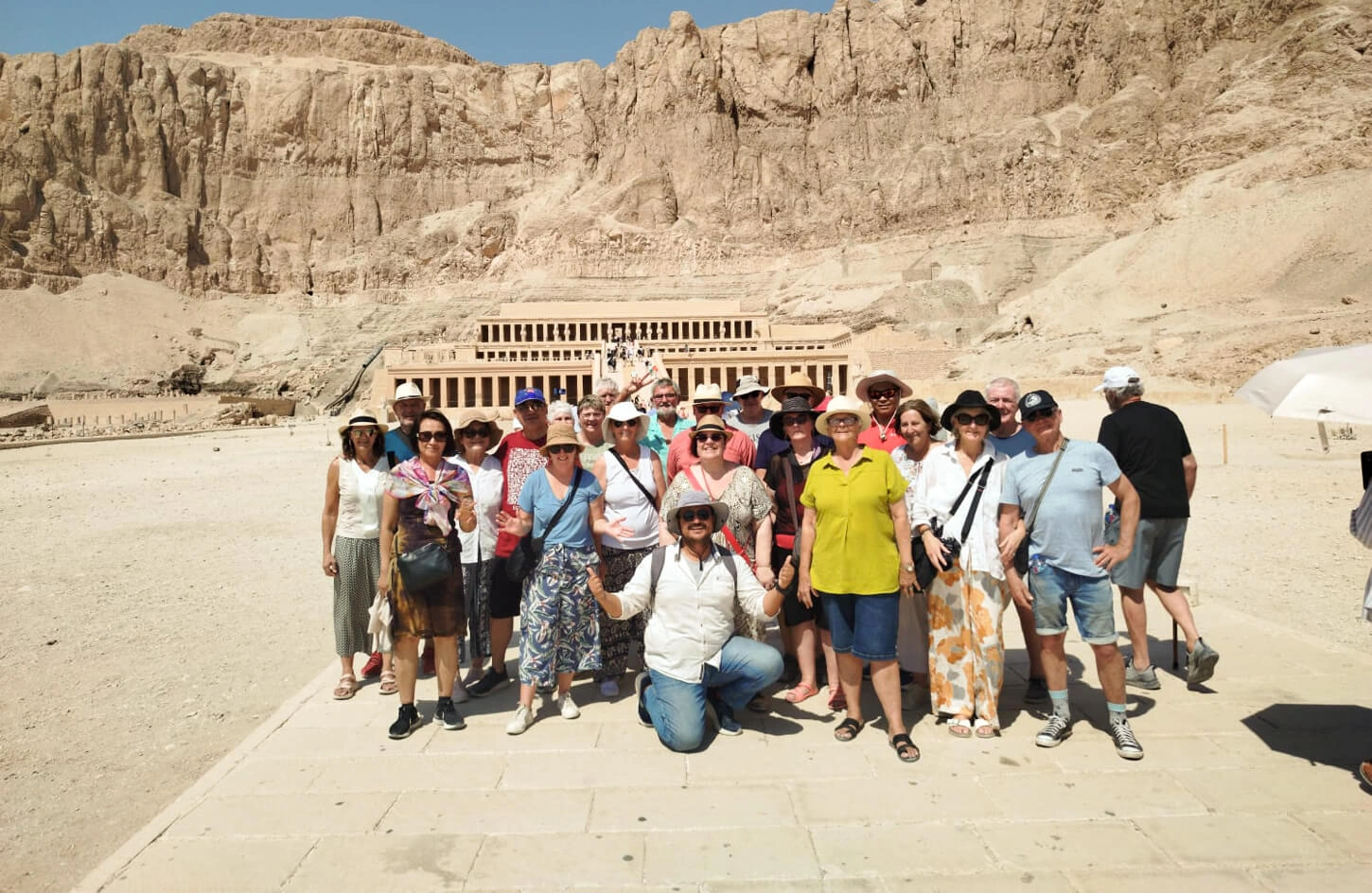
Classic Egypt tours follow the country’s essential historical route: Cairo and the Pyramids of Giza, then south to Luxor and the Valley of the Kings, then to Aswan and Abu Simbel. This is the itinerary that Egypt’s geography suggests — following the Nile from its Delta in the north to its upper reaches in the south — and it is the framework that most organized tours use because it is genuinely the best way to experience the country’s pharaonic heritage in sequence. A classic Egypt tour of eight to twelve days gives enough time to do this route properly without feeling rushed.
Egypt Short Breaks
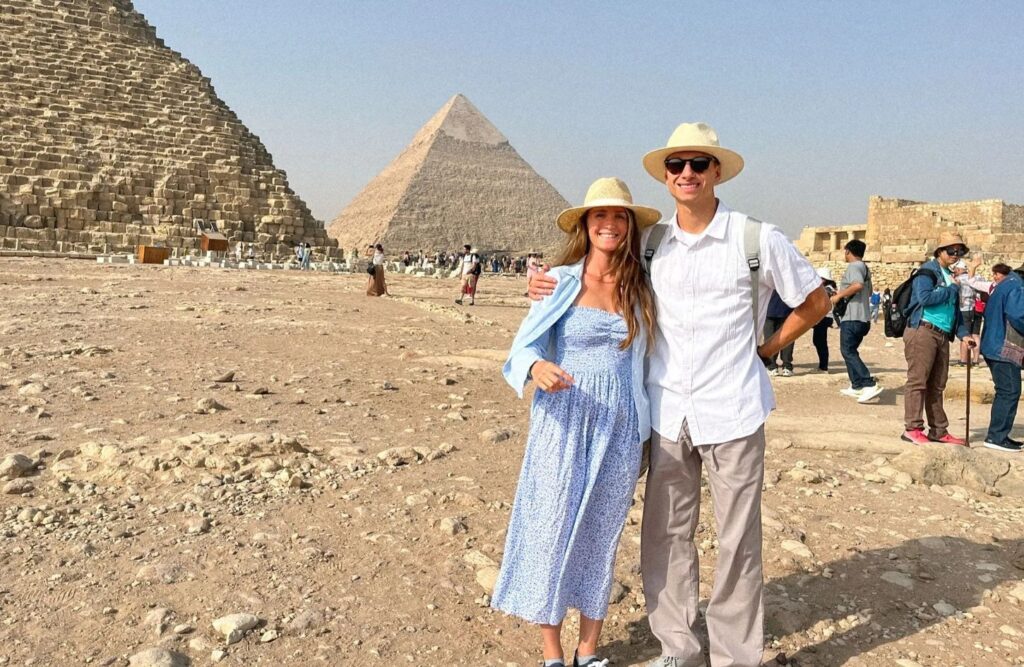
Not everyone has ten days. Egypt short breaks of three to five days are entirely viable and enormously rewarding if you choose your focus carefully. Cairo and the Pyramids alone fill three days comfortably; adding a flight to Luxor extends this to five or six. The key with short breaks is to resist the temptation to overload the itinerary — two or three destinations done well is far more satisfying than six destinations skimmed.
Egypt Safari Tours
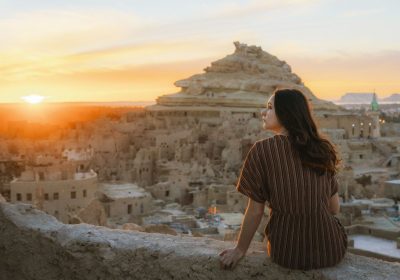
Beyond the Nile valley monuments, Egypt has some of the most dramatic desert landscapes in the world. Egypt safari tours into the Western Desert — visiting the White Desert with its surreal chalk formations, the Black Desert, the oases of Bahariya and Farafra, and the remote Siwa Oasis near the Libyan border — offer an entirely different Egypt experience. These trips work well as standalone journeys or as extensions to a classic historical itinerary for travelers with more time.
Egypt Tailor Made Tours
For travelers with specific interests — photography, archaeology, birdwatching, Nubian culture, culinary exploration — an Egypt tailor made tour built around those interests will consistently outperform a standard group itinerary. The flexibility to set your own pace, prioritize the sites that matter most to you, and add destinations that standard itineraries skip is particularly valuable in a country as diverse as Egypt.
Step Two: Choose Your Itinerary
Once you have decided on the type of trip, the next step is building a realistic day-by-day itinerary. The distances between Egypt’s main destinations are significant — Cairo to Luxor is roughly 700 kilometres; Luxor to Aswan another 200 — and transit time needs to be factored into planning rather than treated as wasted time.
A useful framework for first-time visitors: allow a minimum of two full days in Cairo (ideally three), two days in Luxor, and two days in Aswan. Add a day for Abu Simbel from Aswan and a half-day for travel between each city, and you have a nine-day itinerary that covers the essentials at a pace that allows genuine engagement rather than rushed box-ticking. Extending to twelve or fourteen days allows you to add Alexandria, the White Desert, or additional time in Luxor for the Tombs of the Nobles and the Luxor Museum.
If your trip includes a Nile cruise between Luxor and Aswan, factor in three to four nights on the water — which covers the river journey and the temple stops at Edfu, Kom Ombo, and Esna — as the centrepiece of the Upper Egypt section of your itinerary.
Step Three: Choose How to Travel the Nile
How you travel between Luxor and Aswan is one of the most important decisions in planning an Egypt trip, and the options differ significantly in experience, pace, and price.
Standard Nile Cruises
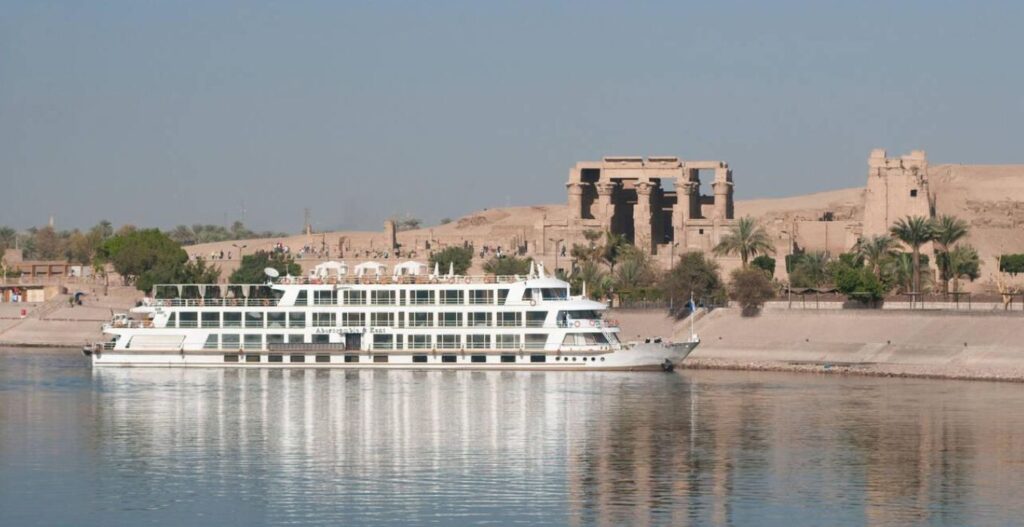
The most popular option is a standard Nile cruise on one of the large cruise ships that operate regularly between Luxor and Aswan. These ships typically carry 60 to 150 passengers, with comfortable cabins, on-board restaurants, sun decks, and guided excursions included at each stop. A 5 star standard Nile cruise in this category offers well-appointed cabins, good food, and professional guiding — a reliable, efficient way to cover the river journey. For travelers who want a step up in quality and more intimate surroundings, a deluxe Nile cruise offers enhanced cabin quality, smaller passenger numbers, and generally a higher standard of guiding and service.
Luxury Nile Cruise
A luxury Nile cruise represents the premium end of the standard cruise category — smaller ships, higher-quality cabins, fine dining, and a more curated excursion program. These ships carry fewer passengers than standard cruises, giving them a more exclusive feel while following the same Luxor-to-Aswan route. They are particularly well suited to travelers for whom comfort and service are as important as the historical experience.
Dahabiya Nile Cruise
A Dahabiya Nile cruise is an entirely different experience. A dahabiya is a traditional two-masted wooden sailing vessel — the type used by 19th-century travelers including Agatha Christie and Flaubert — carrying between six and twenty passengers on a journey that takes five to seven nights rather than three to four. The pace is slower, the itinerary more flexible, and the connection to the river considerably more intimate. Dahabiyas stop at smaller sites that the larger cruise ships never visit, anchor in quiet bays away from towns, and give passengers the experience of actually traveling by sail rather than by motor. It is the most atmospheric and memorable way to travel the Nile — and, proportionally, the most expensive per passenger.
Step Four: Sort Your Entry Requirements
Most international visitors need a visa to enter Egypt. The process is straightforward but needs to be handled before you travel, not left to chance.
Citizens of most Western countries — including the US, UK, EU member states, Australia, and Canada — can obtain an e-visa online through Egypt’s official immigration portal before departure. This is the recommended approach: the process takes around ten minutes, costs a modest fee, and produces a QR code that is scanned at the airport on arrival. An alternative is a visa on arrival at Cairo International Airport, available to citizens of the same countries — this works but involves queuing at the visa counter, which can be time-consuming on busy arrival days.
Your passport must be valid for at least six months beyond your intended arrival date. Make digital copies of your passport, visa confirmation, travel insurance, and emergency contacts and store them somewhere accessible from your phone — separate from your physical documents.
Step Five: Budget Realistically
Egypt is a more affordable destination than most comparable historical travel experiences — the cost of entrance fees, local transport, food, and accommodation is considerably lower than equivalent destinations in Europe or East Asia. The main cost variables are the level of accommodation you choose, whether you travel independently or on an organized Egypt tour package, and the type of Nile cruise you select.
A mid-range independent traveler — staying in comfortable three to four star hotels, eating at a mix of local and tourist restaurants, using Uber for city transport, and booking guided day tours for the main sites — can travel comfortably for significantly less than equivalent trips to Western European destinations. A fully organized Egypt tours package covering flights, accommodation, guided excursions, and a Nile cruise represents a higher upfront cost but removes most of the logistical complexity and often works out very competitive on a per-day basis once all costs are included.
Key costs to factor in: entrance fees at major sites (the Giza Plateau, Valley of the Kings, and Grand Egyptian Museum each require separate tickets), internal flights (Cairo to Luxor or Aswan takes about an hour and is considerably faster than the overnight train for travelers on tight schedules), and tips — tipping is standard practice in Egypt at restaurants, for guides, and at hotels, and budgeting for it avoids awkward moments.
Step Six: Decide Where to Stay
Egypt’s accommodation ranges from internationally branded luxury hotels to budget guesthouses, with the quality of mid-range options improving considerably in recent years. The choice of where to stay affects not just comfort but also logistics — a hotel on the west bank of Luxor saves travel time to the Valley of the Kings; a hotel near the Giza Plateau means the pyramids are visible from your window.
In Cairo, the Zamalek and downtown areas are the most convenient bases for first-time visitors — close to the Egyptian Museum, the Grand Egyptian Museum transfer point, and the main transport links. In Luxor, the East Bank (near Luxor Temple and Karnak) is the most practical base for a full itinerary; the West Bank is quieter and closer to the Valley of the Kings. In Aswan, a hotel on or near the Corniche gives access to the Nile views and the boat connections to Philae and the Nubian villages.
For Red Sea holidays in Hurghada, Sharm El Sheikh, or Marsa Alam, all-inclusive resort accommodation is the most common and often the most cost-effective approach — particularly for families or travelers whose primary focus is the beach and water sports rather than cultural sightseeing.
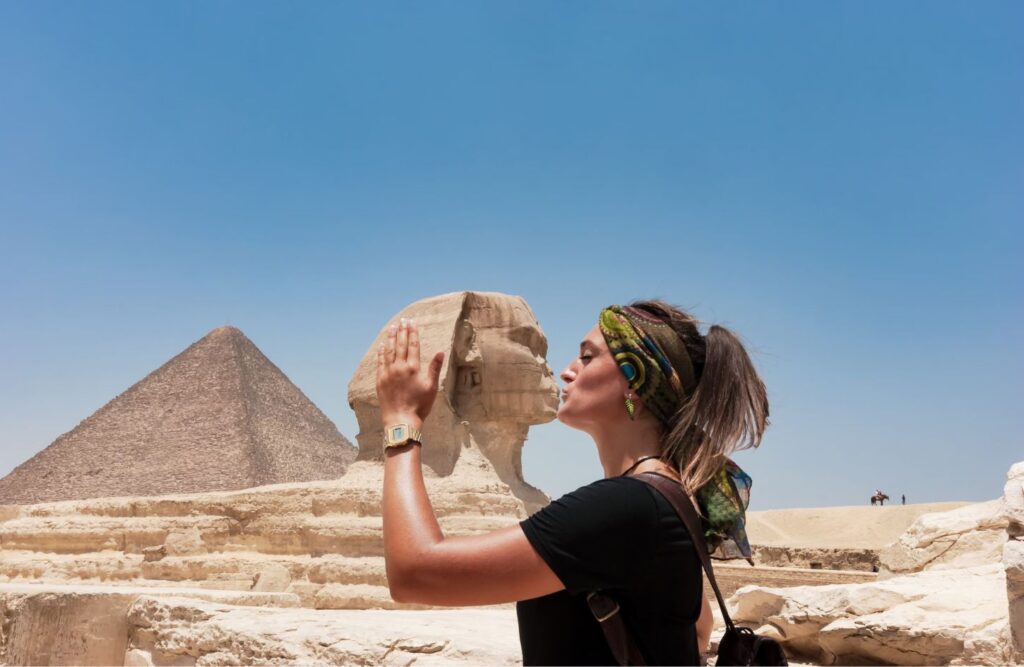
Step Seven: Plan Your Cairo Day Tours and Site Visits
Egypt’s major sites require some planning beyond simply showing up. Entrance ticket systems, opening hours, and crowd patterns all affect the experience significantly — and knowing them in advance makes a real difference.
The Giza Plateau is best visited at opening time (8am) to beat both the crowds and the heat. The Valley of the Kings follows the same logic — arriving early gives you the most popular tombs before the tour groups arrive en masse by mid-morning. The Grand Egyptian Museum warrants a dedicated half-day minimum; the Tutankhamun galleries alone take 90 minutes if you give them proper attention.
For travelers based in Cairo, the city’s range of Cairo day tours allows you to cover the Pyramids, the GEM, Islamic Cairo, and Coptic Cairo across separate days with specialist guides for each area — a more rewarding approach than attempting to cover everything in a single rushed day.
Egypt Travel Tips: Practical Essentials
- Best time to visit: October through April for the monuments; April through October for the Red Sea. The shoulder months of October and April offer the best balance of weather, crowds, and value.
- Currency: The Egyptian pound (EGP). Cash is essential for markets, smaller restaurants, entrance fees, and tips. ATMs are widely available in cities; carry small denomination notes for everyday use.
- Dress: Modest dress — covering shoulders and knees — is appropriate throughout Egypt and mandatory at mosques and churches. Light, covering layers work well for both sun protection and cultural respect.
- Water: Tap water is not safe to drink. Use bottled water consistently, including for teeth-brushing.
- Transport: Uber and Careem operate in all major cities and are the most transparent transport option for tourists. Agree on fares in advance for regular taxis.
- Health: No vaccinations are required for entry but Hepatitis A is recommended. Travel insurance covering medical evacuation is strongly advised.
- Photography: Permitted at most outdoor sites; flash is prohibited inside tombs and museums. Always ask before photographing people.
- Tipping: Standard practice for guides, drivers, hotel staff, and restaurant servers. Budget accordingly and carry small notes.
Choosing the Right Egypt Trip for You
The range of ways to experience Egypt is genuinely broad — from a three-day Egypt short break focused on Cairo and the Pyramids, to a two-week classic Egypt tour that combines the Nile valley monuments with a luxury Nile cruise, to a fully customized Egypt tailor made tour built around specific interests. Each approach suits different travelers and different constraints, and none is inherently superior to the others.
What they all have in common is that the quality of the experience is directly proportional to the quality of the planning. Egypt rewards preparation — knowing which tombs in the Valley of the Kings to prioritize, understanding how the Nile cruise schedule works, having a guide who can explain what you are looking at in its historical context — in a way that few other destinations quite match. The monuments are extraordinary on their own terms, but understanding them makes them unforgettable.
Whether you book an organized Egypt tours package or plan every detail yourself, the trip is worth making. Egypt is one of the few places in the world where the reality consistently exceeds the expectation — and that is a rare thing in travel.